A Nonprofit Event Planning Checklist for Teams That Need Fewer Surprises
A useful event checklist does more than list vendor tasks. It helps the organization avoid preventable surprises.
That means looking beyond the visible mechanics of the event and into the workflow around it: how the registration experience works, how guest data will be handled, how attendance will be recorded, how finance will interpret transactions, and what follow-up will happen once the event is over.
What follows is a practical planning framework for nonprofit teams that want fewer last-minute fixes and better post-event value.
1. Clarify the purpose before the logistics harden
Before finalizing tickets, sponsors, or communications, write down the primary job of the event.
Is it meant to raise unrestricted revenue? Steward major donors? Introduce new prospects? Re-engage alumni or community members? Drive sponsorship visibility? Advance a campaign story?
Many events try to do more than one thing, but one purpose should still lead. That priority affects ticket structure, list strategy, host expectations, follow-up, and reporting.
2. Define what counts as success
Choose measures that reflect the event's actual purpose.
Possible metrics include:
· registrations
· attendance rate
· revenue net of direct costs
· sponsorship revenue
· first-time attendee count
· donor conversion after attendance
· survey completion or post-event engagement
· recurring giving or pledge follow-up
If success is defined only as tickets sold, the team may miss whether the event actually built relationships worth keeping.
3. Design the registration structure early
Registration decisions shape everything afterward. Determine:
· paid, free, or mixed registration
· ticket levels and inclusions
· guest rules
· sponsorship packages and entitlements
· whether the event includes any charitable component or advantage logic
· what information is essential at registration versus later
Keep the registration path as simple as the event allows. More questions do not automatically produce better operations.
4. Plan for mobile and confirmation from the beginning
Most users now arrive on nonprofit sites via mobile devices, even if desktop still drives more revenue in many digital journeys. Registration therefore has to work on phones without forcing awkward scrolling, unclear totals, or fragile guest entry.
Confirmation should also be part of the plan, not an afterthought. Decide what the registrant sees immediately after submitting and what the confirmation email should contain.
5. Decide how guest data will be collected and corrected
Guest workflows are one of the biggest sources of event friction. Before launch, determine:
· whether guest names are required at purchase
· whether purchasers may return later to complete details
· who may edit guest information and until when
· how substitutions will be handled
· how seating or meal information will be captured if needed
A team that does not pre-decide these rules usually ends up improvising them under pressure.
6. Align finance and advancement on transaction logic
This step is often skipped until it becomes urgent. Ensure the right people agree on:
· what portion of the payment is donation versus purchase, if applicable
· whether a receipt or acknowledgment is appropriate and under what rules
· how sponsorships will be treated
· how refunds, cancellations, and transfers will be recorded
· what data finance will need after the event
The event team should not discover tax or reporting issues after the confirmations are already out.
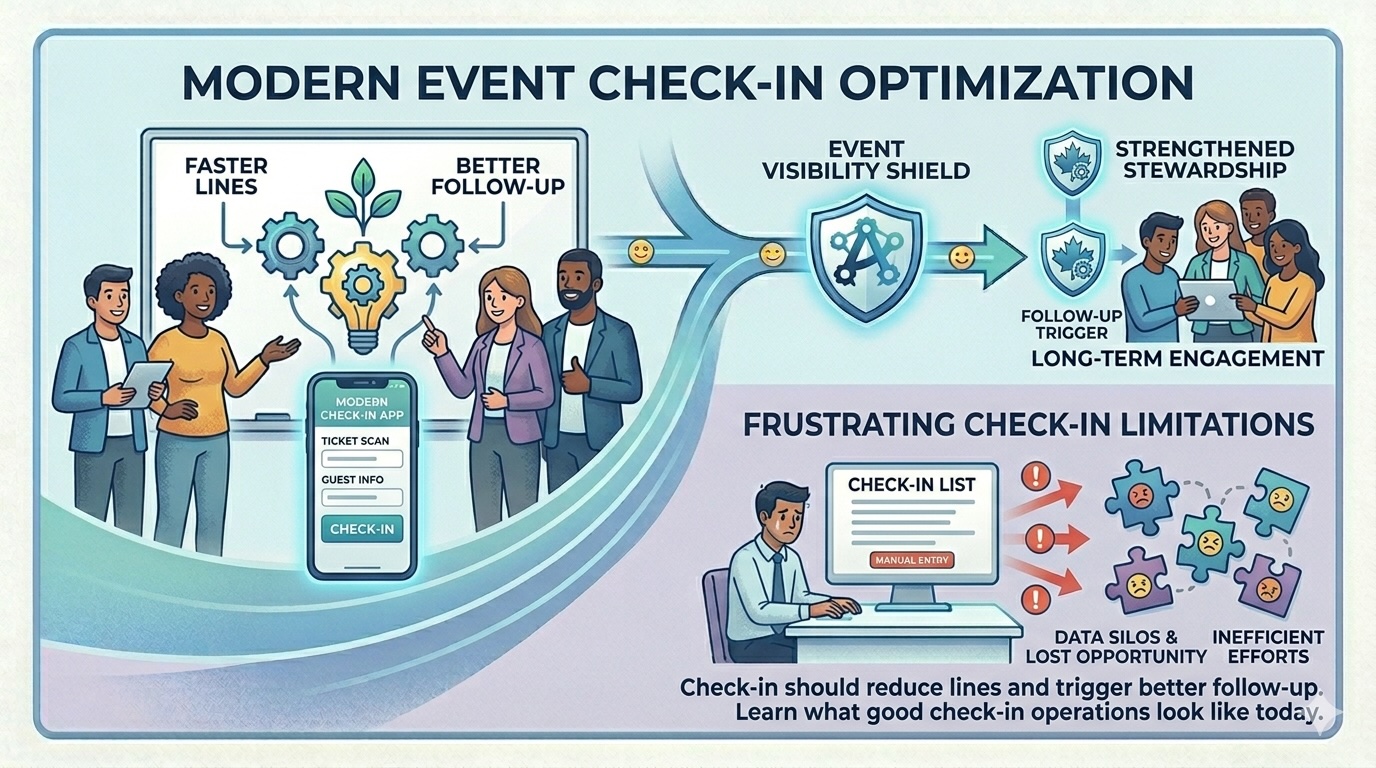
7. Build the check-in workflow before the final week
Check-in should not depend on printed spreadsheets created the night before. Define:
· who will staff check-in
· whether staff will use phones, tablets, or laptops
· how QR or confirmation lookups will work
· how walk-ups, substitutions, and waitlist promotions will be resolved
· what constitutes successful check-in in the system
The more this is rehearsed in advance, the less the event begins with uncertainty.
8. Plan the post-event follow-up before the event happens
Good teams do not wait until the room is empty to decide what comes next. Prepare:
· same-day or next-day thank-you messaging
· sponsor follow-up
· attendee versus no-show messaging
· survey distribution
· gift follow-up where relevant
· internal debrief and reporting cadence
The event should produce data that makes this follow-up more relevant, not more generic.
9. Decide what reports leadership will actually need
Do not wait until the board asks for numbers to define the reporting package. Decide in advance:
· attendance totals and attendance rate
· revenue, refunds, and net outcome
· sponsorship performance
· registration source or campaign attribution if tracked
· new versus existing constituent participation
· post-event actions worth measuring
This protects the team from rebuilding the event story from memory later.
10. Run a final workflow audit, not just a final production meeting
In the last week, check the full participant journey:
· can someone register easily on a phone?
· do confirmation messages make sense?
· can staff find and update attendee records?
· does finance understand document and payment handling?
· can the team distinguish registrants from attendees after the event?
· is there a concrete follow-up plan already drafted?
That audit often reveals more than another discussion about decor or signage.
A well-run nonprofit event is not one where nothing changes on the day. It is one where the inevitable changes can be absorbed because the underlying workflow is sound.
If your events still rely on spreadsheets, email threads, and last-minute fixes to hold the workflow together, the planning problem may actually be a platform problem. Altrinum helps nonprofits manage registration, check-in, follow-up, and reporting in one cleaner process.

